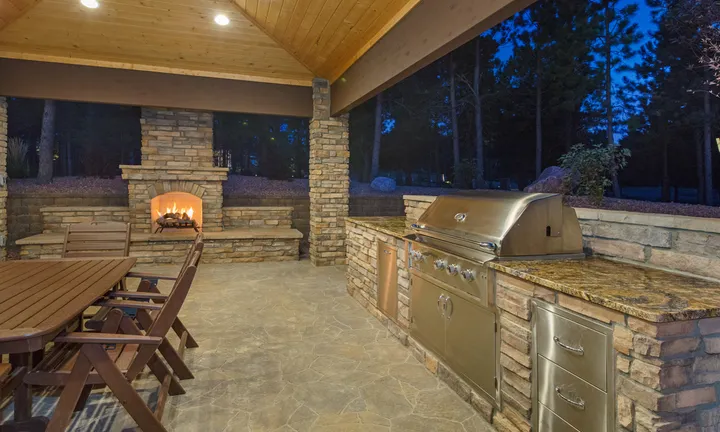
Nothing beats a DFW summer night spent on a covered porch using your grill, pizza oven, or fire pit to create your next dining masterpiece for your guests.
An outdoor kitchen is a fantastic investment that helps homeowners engage in the culture of entertaining we foster during the summer and fall in the Metroplex.
If you’re eager to extend your usable square footage with an outdoor kitchen, want to keep the heat outside during grilling season, or just want a reason to be outside more while the kids are on break, it’s time to start making plans before the heat really kicks in!
Let’s explore what outdoor kitchens actually cost in the DFW market, which materials hold up in North Texas conditions, what to plan before a single block is laid, and the layout mistakes to avoid before they become expensive problems.
Outdoor Kitchen Cost Tiers in DFW
Outdoor kitchen pricing covers a wide range, and the gap between a basic setup and a full outdoor living space is significant. Here’s how the tiers break down for Fort Worth-area homeowners.
Basic Built-in Grill Island: $5,000 to $20,000
You’ve probably seen this amenity in several homes around the area. This basic grill island sports a built-in gas grill within an area of outdoor counterspace. Think of this as a step up from your sun-soaked charcoal grill.
Keep in mind, this price range does not include the sink, refrigeration, and shade structure that would make this a full outdoor kitchen. This is a choice for homeowners who want a clean, permanent focal point without committing to a larger project.
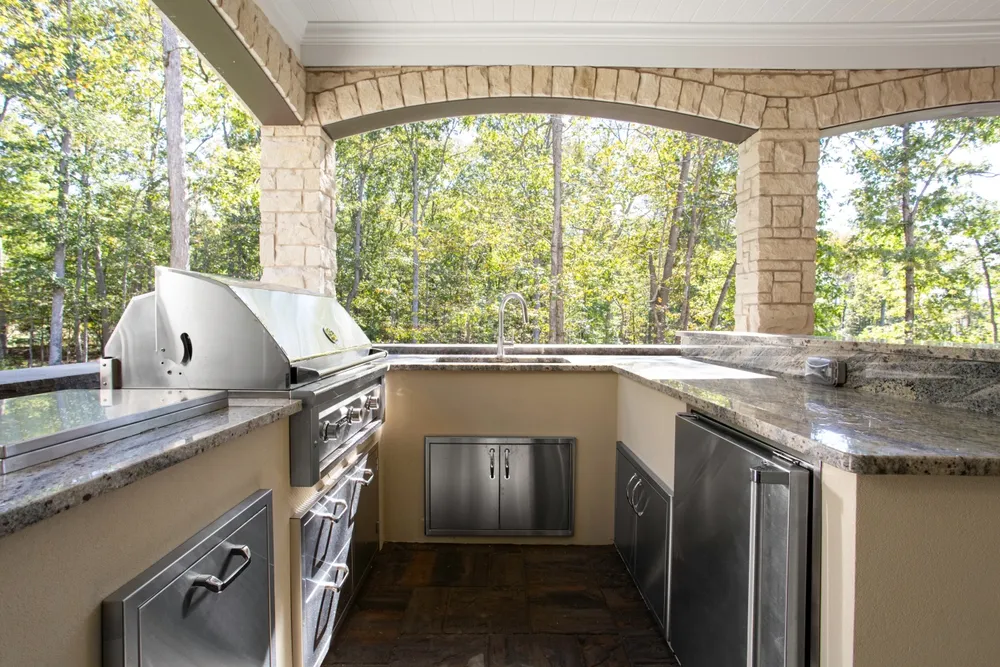
Mid-range With Sink and Storage: $15,000 to $35,000
This is the most common outdoor kitchen investment among DFW homeowners who entertain regularly. At this tier, you’re typically looking at:
- A built-in grill
- A sink with plumbing
- Dedicated storage
- Counter space for prep
- Sometimes a small refrigerator
A modest shade structure, like a pergola or patio extension, may fall in this range depending on size and materials. This tier requires permits and coordination with licensed plumbing and gas contractors, which is standard and worth planning for.
Full Outdoor Kitchen with Covered Structure: $40,000 to $100,000+
At this level, the outdoor kitchen becomes an outdoor room.
- A fully covered patio or pavilion
- Outdoor-rated cabinetry
- A pizza oven
- Refrigeration
- Sink
- Lighting
- Fans,
- Premium grill setup
Some homeowners take this further with outdoor audio, televisions, and heating elements that extend the usable season past October. Projects at this tier involve structural design, multiple subcontractors, and a full permit set. That’s exactly where a design-build firm like our team at The Rockaway Company earns its value, handling the coordination so the homeowner doesn’t have to.
Materials That Survive Texas Weather
North Texas is hard on outdoor structures. Summer temperatures regularly exceed 100°F. UV exposure is intense from late spring through September. And while winters are mild most years, occasional ice storms and temperature swings stress materials that weren’t built for the range. Choosing the wrong materials isn’t just an aesthetic problem. It’s a maintenance problem that compounds over time.
These are the following materials you should consider when designing your outdoor kitchen:
- Concrete block frames wrapped in stone veneer or stucco (Moisture-resistant and hold up well in Texas temps)
- 304-grade stainless steel (The standard for outdoor cooking equipment in Texas’ climate)
- Marine-grade polymer, stainless steel, or teak cabinetry
Avoid wood framing as the primary structure for any outdoor kitchen in this climate. Wood absorbs moisture, expands and contracts with temperature shifts, and creates a surface where mold and insects find a foothold. It may look fine for a season or two, but it will create problems after that.
What to Plan Before Construction
Outdoor kitchens involve more coordination than most homeowners expect at the start. The visible part is the grill and the countertop. The invisible part is what determines whether the project gets done on time, on budget, and without a stop-work notice.
Gas, water, and electrical
Running a gas line to an outdoor kitchen requires a licensed plumber in Texas and a permit from the City of Fort Worth or your relevant municipality.
The same applies to plumbing for a sink and electrical for outlets, lighting, and refrigeration.
Gas, water, and electrical installations are not optional steps for your outdoor kitchen, nor are they DIY tasks.
When planning for your kitchen, budget for licensed subcontractor work and factor permit timelines into the project schedule.
Drainage and Grade
Water has to go somewhere. If your patio doesn’t drain away from the house and the outdoor kitchen doesn’t account for sink drainage and grease disposal, you’ll have a maintenance problem after the first heavy rain.
Grade and drainage should be assessed before design is finalized. A proper drain connection for the sink and a grease trap for cooking runoff are worth including in the original build rather than retrofitting later.
HOA Restrictions
HOAs all have their own guidelines that can direct how large your kitchen can be. Height limits, setback requirements, approved materials, and rules about covered structures vary by community.
Some HOAs require design approval before construction begins. Checking with your HOA before finalizing plans is a straightforward step that prevents costly redesigns after the fact.
Ventilation Under Covered Patios
Cooking under a covered structure without adequate ventilation creates smoke and carbon monoxide buildup. Outdoor-rated exhaust fans, strategic placement of the grill relative to open sides, and the overall design of the covered area all factor into safe, comfortable cooking. This is part of the design conversation, not an afterthought.
Layout Mistakes to Avoid
A well-built outdoor kitchen with a poor layout is still frustrating. These are the most common planning mistakes, and all are easier to correct during the design phase than after construction.
Placing the Grill Too Close to the House
Most building codes require a minimum distance between a gas grill and any combustible structure.
A grill placed directly against the house or under a low soffit creates cosmetic and safety problems over time. Standard guidance calls for at least 10 feet of clearance from any combustible surface, but your permit requirements will specify the exact standard for your location.
Forgetting Prep Space and Counter Overhangs
A grill without counter space on both sides forces awkward cooking. Plan for at least 18 inches of counter space on each side of the grill, and consider a counter overhang of 12 to 15 inches on the guest-facing side if the kitchen will be used for serving.
Underestimating Storage and Trash
Where does the trash go? Where do the tools, the grilling accessories, the paper towels, and the extra propane tank live?
So many people forget to plan for storage in outdoor kitchens and find themselves frustrated and redesigning at the end.
We suggest building in more drawer and cabinet space than you think you’ll need. As far as trash goes, covered trash storage built into the island keeps the space looking clean and keeps wildlife out of the bins.
Design Your Outdoor Kitchen Expertly with The Rockaway Company
The Rockaway Company has been designing and building outdoor living spaces for Fort Worth and DFW homeowners for 31 years. Our design-build process means your outdoor kitchen gets planned as a complete project, from gas line to shade structure, by a single team that’s responsible for the whole outcome. That matters when you’re juggling several parts of a project under one timeline.
If you’re planning an outdoor kitchen for this summer, now is the right time to start the conversation. Contact us today to schedule a consultation.